
The method
Not just massage. Not just listening.
An integrated journey that unites body work with understanding its emotional roots.
How it works
The method that unites body and life story.
Not just massage. Not just listening. An integrated journey.
20 min · Online
Free discovery call
I listen to your situation, and together we work out whether and how I can help. No commitment, no sales pitch.
First session
Integrated assessment
Body reading through massage, combined with your emotional and biographical history via Psychosomatics. A complete picture.
Individual sessions
Personalised programme
Sessions calibrated for you — massage, Psychosomatics, or both. You decide the pace and frequency.
Lasting results
The body finds its language
You learn to read your body's signals. Pain is not the enemy — it's a message you can finally understand.
We don't follow protocols, we follow people.
Psychosomatics
The biological language of emotions.
Psychosomatics is a complementary therapeutic approach that studies the link between the emotional states we live through and the way they show up physically in the body. Here are the key ideas:
Biological conflict
An event experienced with a strong emotional charge that the brain cannot process. Biology responds by switching on a survival programme — often a physical symptom.
Active phase vs resolution phase
Every biological programme has two phases: the active phase (the conflict is present) and the repair phase (the conflict resolves). Many symptoms appear during the repair phase.
Biological memory
The body “remembers” emotional experiences more than the conscious mind does. Trauma, shock and intense fear settle into the muscles, into the posture, into the autonomic nervous system.
Complementary approach
Psychosomatics does not replace conventional medicine. It works alongside it, adding a reading of the symptom that goes beyond the immediate physical cause.
These practices do NOT replace professional medical advice.
The technique
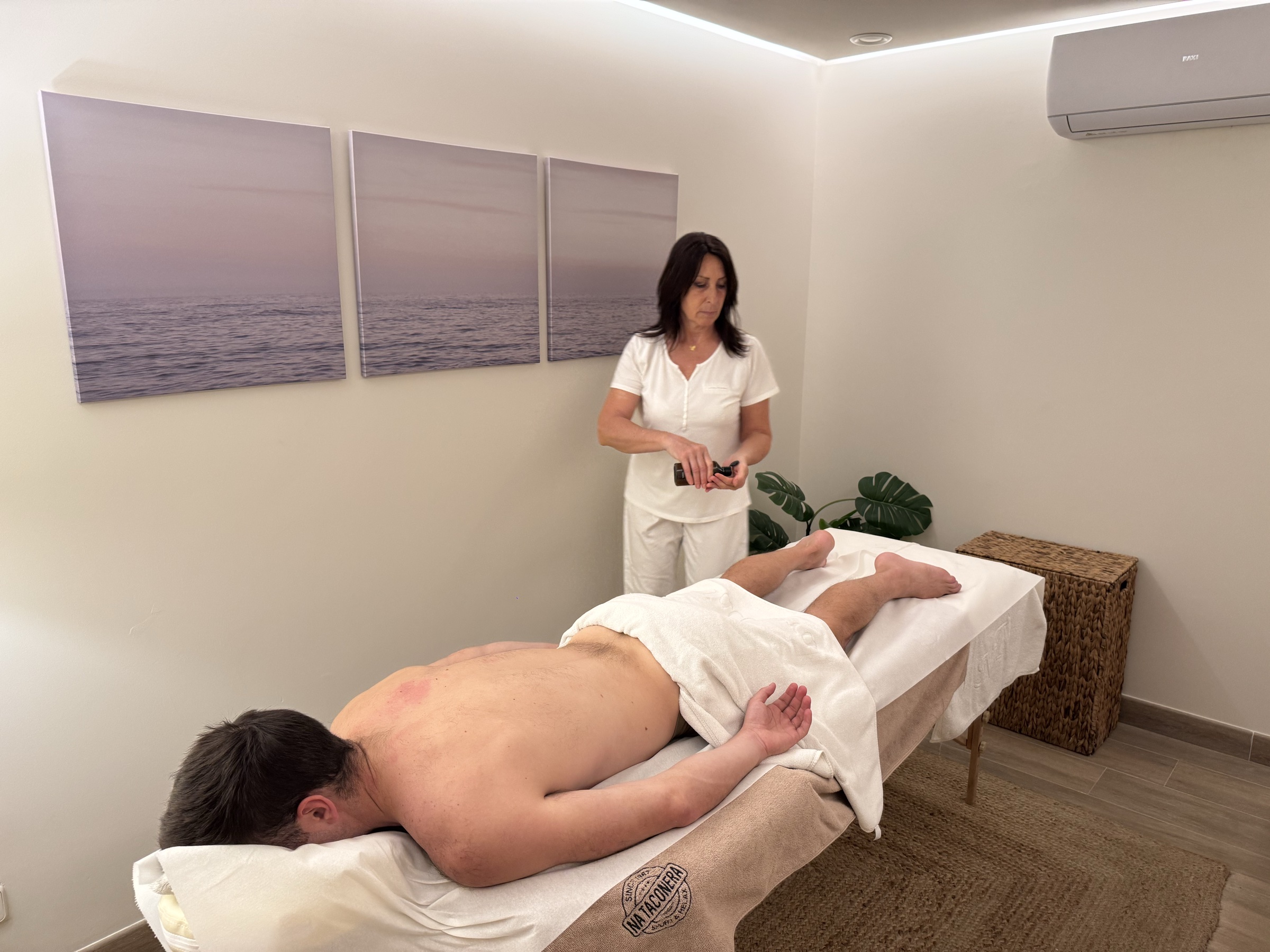
Meridian Physiotherapy: the acupressure of Buddhist monks.
A hands-on treatment technique using finger pressure on soft tissue and trigger points to relieve muscle and joint pain. It comes from the ancient Asian acupressure practised by monks in the temples — a tradition of respect and authority, held in the same regard as doctors and mentors in Buddhist culture.
Along the energy lines
The body's meridians are followed — the energy lines of traditional Chinese medicine — looking for blocked acupuncture points.
Fingers, not needles
Finger pressure takes the place of acupuncture needles. The same energy logic, in a completely manual, non-invasive approach.
Areas treated
Neck, shoulders, arms, elbows, wrists, back, hip, feet. Any area where an energy blockage shows up as pain.
Pressure
Pressure on the inflamed area moves blood through the blocked tissue.
Release
As the pressure is released, fresh oxygen-rich blood flows in, setting healing in motion.
Detoxification
Improved circulation clears out the waste products and toxins that cause pain and stiffness.
The seven chakras
The vital energy centres.
Each of the seven chakras represents a set of emotions that shape physical and emotional health, and success in life. When they are in balance they run at their highest frequency — drawing in the right people and the right opportunities, and the body works in harmony.
In times of stress and uncertainty our energy centres close up, producing physical or emotional symptoms: anxiety, a sense of being blocked, of being “beside yourself”. Working on the meridians and the chakras brings the balance back.
Deep dive
What is emotional biodecoding?
Psychosomatics is a complementary therapeutic approach that sets out to identify and release unconscious emotional conflicts linked to physical and psychological complaints. It rests on the premise that unresolved emotions can show up in the body as physical symptoms. Working through those conflicts supports a deeper and longer-lasting process of healing.
What is it used for?
It is used to identify and release emotional conflicts that can affect physical and mental health. It helps with chronic problems, phobias, anxiety, stress and other emotional imbalances. It supports a better quality of life and a steadier emotional balance.
How does a session work?
Over a series of sessions we explore the emotions and past experiences that may be connected to your current symptoms. Techniques of analysis and reflection bring emotional patterns and limiting beliefs to the surface, and we then work to resolve them.
How long does it take?
An individual session generally lasts one to two hours. The number of sessions needed depends on how complex the issue is: sometimes a single session is enough, other times several are needed over weeks or months.
How should I prepare?
Come with an open mind, ready to explore your own emotions. Wearing comfortable clothes, avoiding heavy meals before the session, and thinking beforehand about the situations or symptoms you want to work on all make the process easier.
Important note: These practices are complementary and do not replace medical diagnoses or treatments prescribed by qualified health professionals. I always recommend keeping your own doctor alongside you on this journey.